
Experience History
A heritage discovery platform that maps every museum, event, and story worth knowing across the UK.
Making Heritage Discoverable
Experience History set out with an ambitious goal: catalogue every museum, heritage event, and local history story in the UK and make them all searchable from a single platform. That meant building something far more complex than a standard website. It needed an interactive map, a filterable events calendar, rich location profiles, and the kind of information architecture that could scale to thousands of entries without feeling overwhelming.
An Interactive Map at the Centre
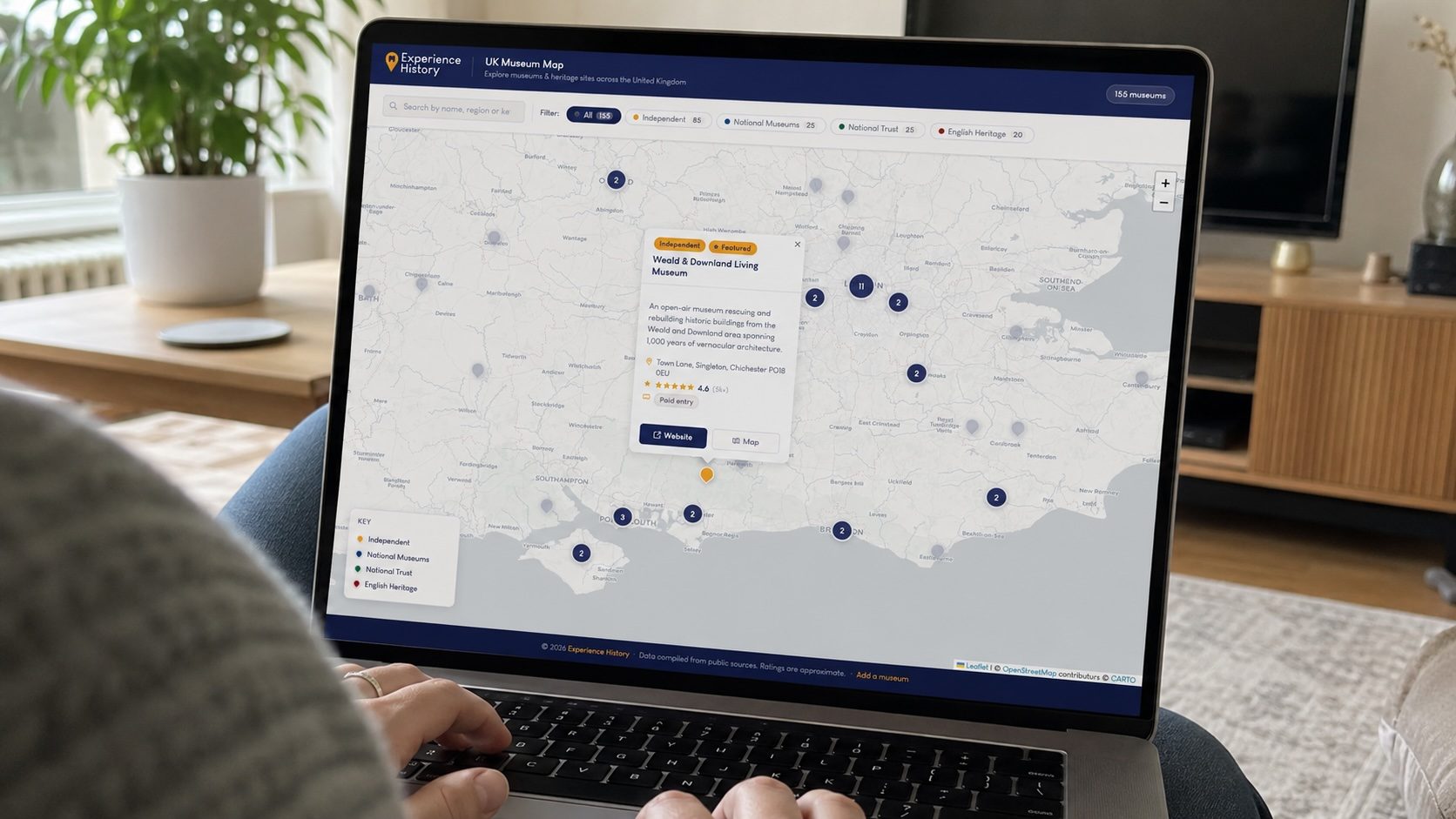
The UK Museum Map is the centrepiece of the platform. Built with Leaflet, it plots 155+ museums with colour-coded markers distinguishing Independent, National Museums, National Trust, and English Heritage sites. Clustered markers prevent visual overload at wider zoom levels, expanding into individual pins as users drill down into a region.
The map header features live filter buttons with running counts, so users can instantly narrow their view to a specific museum type. A search bar allows lookup by name, region, or keyword. Explore the Museum Map →
Events That Stay Current
The events section handles one of the hardest UX challenges in directory sites: keeping content feeling alive. A filterable grid presents heritage events, re-enactments, open days, and history festivals with rich event cards showing location badges, date stamps, category tags, and descriptive summaries.
Search, date range filters, postcode-based proximity search, and distance radius controls let users find events near them without scrolling through dozens of irrelevant results.
Brand and Visual Language
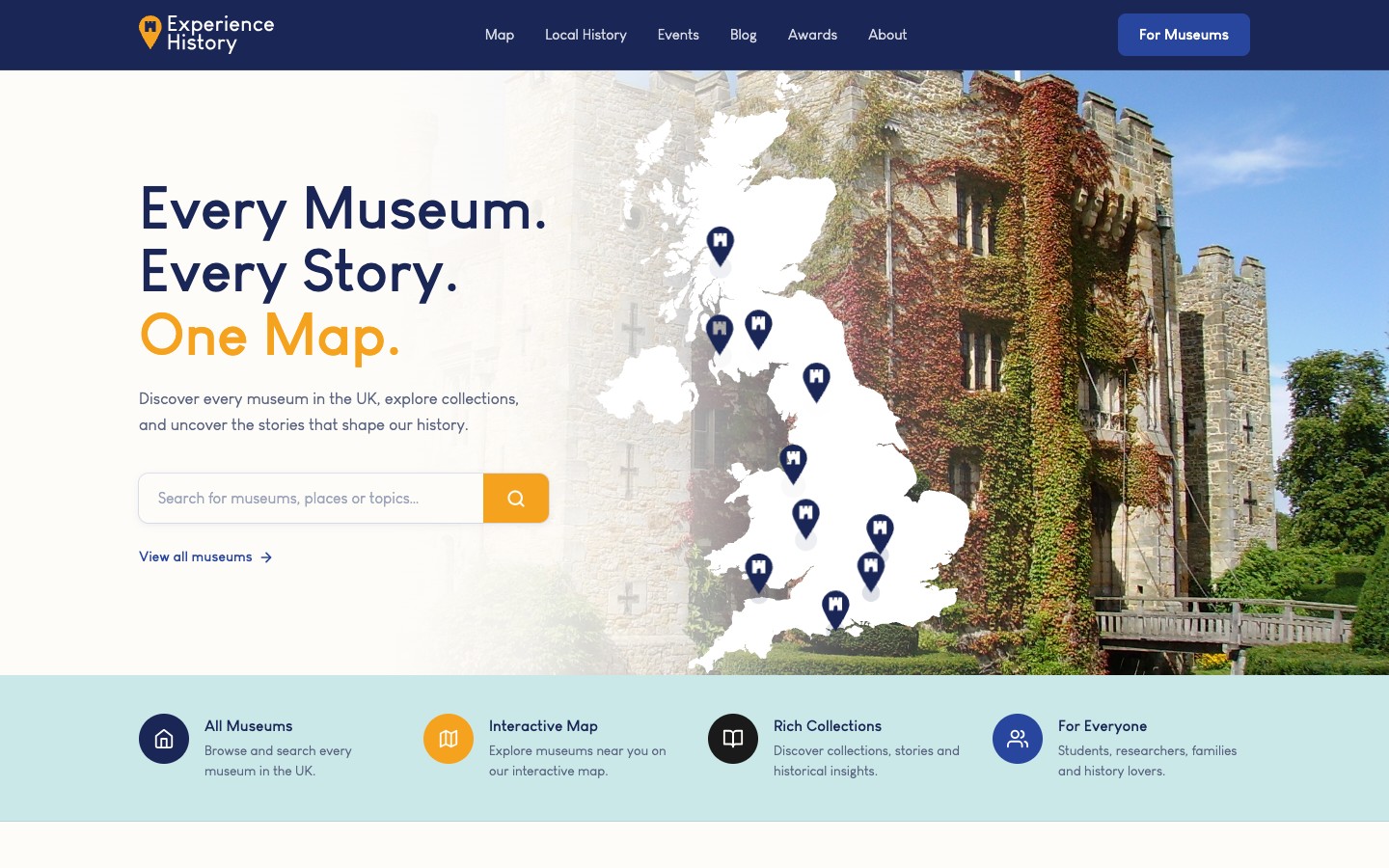
The visual identity uses a deep navy palette with warm amber accents, a combination that feels authoritative and scholarly without being stuffy. The shield-style logo with its map pin motif immediately signals the platform’s purpose: heritage you can locate and visit. Typography is clean and modern, balancing readability for long-form content with the visual weight needed for headlines and statistics.
Featured museum cards use real photography with hover interactions and explore links, making the content browsable and engaging rather than encyclopaedic.
Built for Scale and SEO
With thousands of potential pages, from individual museum profiles to regional directories and event listings, the information architecture had to be both machine-readable and human-friendly. Structured data, semantic HTML, and a clear URL hierarchy ensure that search engines can index the full depth of the site.
The platform also includes a community submission flow for museums to add their own listings, creating a self-sustaining growth loop that keeps the directory expanding without constant manual curation.
The Result
Experience History launched as a comprehensive, fast, and genuinely useful heritage resource. The interactive map, event discovery tools, and rich museum profiles give it a level of depth that static directory sites cannot match. Built to grow, the platform’s architecture supports ongoing content expansion while maintaining the clean, accessible experience that brings visitors back.